Tuesday, 6 October 2015

#TMMMDI: episode two - violence and stupidity

Sometimes the metaphor makes me do things that are a bit stupid.

So a while ago, almost a year now, I was walking home from church on a Sunday night and I saw an old guy sitting in a shop doorway with a cup, asking for money. Part of me had a quick fish around in my mind for a good excuse to just keep walking, but there really wasn't any, I had nothing at all to get back to. So I said hello and I sat down next to him. (Digression: I prefer sitting down with someone to talking to them from a height, sort of because of the metaphor. If you get down to be on a level with a person it feels much more like you're interested in them, you've kind of physically committed to listening to them, and it shows your not ashamed to be seen alongside them, so the conversation can become a more genuine one; the metaphor being that Jesus is God getting down to our level to have a genuine conversation with us, #funmetaphortimes.)

Anyway, after we'd been chatting for a bit, struggling slightly because he was evidently not quite sober, another man came towards us. He was a big, burly, dark-haired Scotsman, dressed pretty smartly but shouting angrily at the man I was with (Steven) and not seeming sober either. He was shouting at Steven about the money that he owed to this man, for some cans that he'd bought him the other week or something like that – really aggressive. I didn't really know what to do so I tried to just engage the guy in conversation, I got up and shook his hand and introduced myself, at which point I think Steven told this guy I was a Christian. My memory of it is a bit blurry now but the conversation for the next few minutes was really stressful and quite disturbing, as this man alternated between boasting to me about how he was a 'born-again Christian' who had read the whole bible and knew that there was no other God, and turning on Steven again and again, shouting at him about giving him the money, threatening him. I tried to say something about Jesus forgiving us our debts, and asking us, out of gratitude for that, to forgive the debts that others owe us – but he responded quite viciously, telling me about how you can't forgive the devil, and this man Steven was the devil, and he had to get the devil out of him, or something like that. I kept trying to keep the man talking to me about theology instead of threatening Steven but at some point Steven stood up to our level, and the man turned to him, shouted at him, and when Steven once again said he had no money to give him, he suddenly struck him, very hard, with an open palm on the side of his head, knocking him to the ground.

I really didn't know what to do now, and this guy was shouting at Steven, threatening to kick his head in, and I tried to stand in between them, not really knowing what else I could do but just desperate for him not to hit Steven again, and tried to keep talking – and after a while the man just looked at me and said, “Well are you going to pay it for him then?”

I said, “What?”

He said, “Are you going to pay me back for him then? He owes me twenty quid.”

And I didn't want to give this man £20 so I thought of something to say and tried to divert the conversation again but before long he realised I was just trying to distract him and came back to the question, “Are you going to pay me back for him? Or am I going to kick his head in?”

And I felt pretty sure that those genuinely were the only two options. And I decided to pay the price. So I gave this man £20 and after a few more sickening minutes of him shouting about his twisted version of Christianity and asking me to also buy him a burger, he walked away, burger-less, and still shouting, down the street and out of sight.

The rest of the night was an eventful one – seeing if Steven was OK, chatting to a young doctor who'd seen it happen, chatting to the police when they came and trying to explain to them why I'd been sitting on the street with a homeless man; and then a whole different episode where I saw (or rather heard) the scottish man again and went to get the police to arrest him. No one pressed charges in the end and I never heard anything more about it.

The police told me I was really stupid to give the man money – and they were probably right. But the thing is, I couldn't help thinking about the metaphor, and I just couldn't resist it.

See the thing is that I would like to think that I'm fundamentally, in and of myself, better than Steven. I'd like to say, 'Look, he's got himself in trouble with this man because he's addicted to things that aren't good for him, he can't make the effort to get himself out of it, and now he's got a debt to pay. I'm not like that.' But actually Steven isn't fundamentally worse than me or any of us. We're all addicted to things that aren't good for us – whether it's that we need to criticise others silently to give ourselves a sense of superiority, or we need people to depend on us so we feel valuable, or the more typical addictions – power, success, money, sexual conquests – even if we can't pin any of those things down I think that all of us are in a very deep sense addicted to selfishness – to caring more about ourselves than anything else. And it traps us. We don't have the strength to just get ourselves out of it, it goes too deep for our self-control to fix.

Maybe a lot of people would agree with that in a sense; but what most of us might not believe is that it means we've got a debt to pay. But I think we do. We don't owe £20 to some spiteful, angry man, who's just lending us money to manipulate our weakness; no, we owe a debt of pain to a good Father who loves us. A Good Father who is more grieved, more hurt by our rebellion, our running away from him and our addiction to selfishness, than we can ever properly imagine. A Father God who created us and gave us everything good that we have and to whom we owe every drop of our joy and our love and our obedience, but who gets instead at best apathy, and at worst downright disdain. We owe him a debt far greater than our very lives are worth.

But instead of just allowing our selfishness to destroy us, instead of compelling us to bear the pain that we've created, God comes and sits next to us in Jesus. He became like us, showed us that he cares. And then as people began to reject and despise him, he didn't resist, but knowing it was what he'd come to do he allowed them to condemn him – and he payed our debt for us. We owed far more than our lives were worth and he gave his perfect life, freely, for us. He let them break his body and drain the life out of him, so that we could be put back together and filled with his life. And then he rose from the dead, which is so good that it would require a whole different set of metaphors!
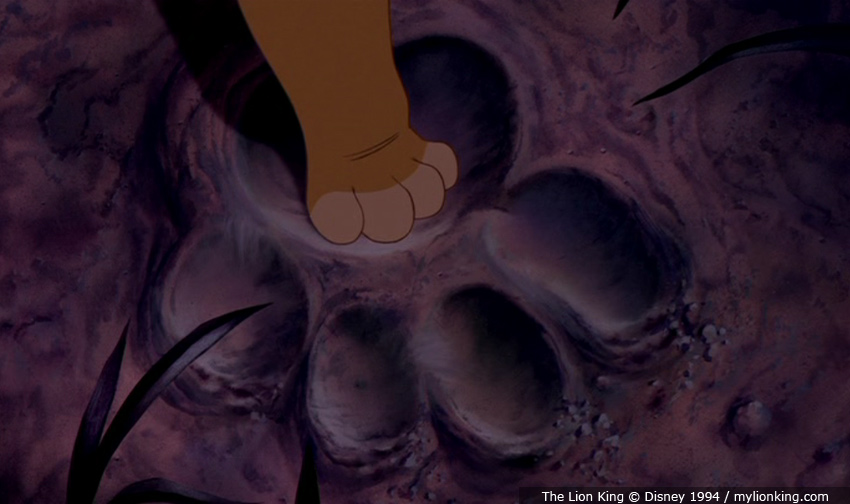
My reluctant £20 feels pretty feeble when I talk about it as a picture of Jesus giving his whole life willingly – but I'm still glad that in that brief moment, I got to walk like Simba with my tiny little feet, inside the huge footprints of my King. It was a pretty nasty night overall to be honest, it felt pretty dark. But I guess it's easy to get sheltered from that side of human reality when I'm spending all my time being a nice happy student and with a nice happy family; and that makes it easy for me to prefer shiny happy metaphors for who God is and what he's done. But I'm glad that actually, he isn't just a shiny happy God who loves us in a Sunday-school kind of way, he's a real God in the real world, and he pays our real debt, and it really hurts – and I reckon that's real love.

Tuesday, 29 September 2015

#TMMMDI: episode one - jumping off a bridge

[To understand what TMMMDI stands for or why I'm writing this blog, see the previous post…]

As I'm sure I've never mentioned to any of you, I went on a gap year. And on that gap year, I went to Victoria Falls, which turned out to be quite a story. But before all of that had happened, I got offered the chance to bungee jump off a bridge over the river, just after the falls. And it was pretty expensive so at first I decided that actually, it'd be really fun and everything, but I couldn't justify spending the money on it. And then I had a conversation with my mate Emily, and I really can't remember what she said, but somehow it made me think about the whole thing as a metaphor – and once I'd had that thought, there wasn't much I could do.

I thought to myself – it's kind of like a leap of faith.

But to be honest, I'm not a big fan of the phrase, 'a leap of faith', I think it's stupid because it implies kind of closing your eyes and jumping out into the dark without really knowing what's going to happen, just with a sort of blind optimism that there must be something there – and in my opinion, and indeed my experience, believing in God doesn't have to be like that at all!

But what's especially fun is that, thinking about it now (and I honestly can't remember how sophisticated my understanding of the metaphor was at the time) it turns out that a bungee jump is a surprisingly good metaphor of what it's like to follow Jesus.

You're standing on the edge of a bridge. It's solid enough, you're in control. Of course, you're not completely in control – the bridge could snap at any time, there could be an earthquake or whatever – but it feels like you are and to a pretty major extent that's true. But then you look over the edge, look up, deep breath, arms out: throw yourself off.

And it's exhilarating. It's mental. It's amazing. Because you are in free-fall – you are rushing through the air, watching the seething mist of the river fly up towards you – and you can't see anything that's going to stop you. Your senses are telling you that you are falling from a great height and you're not going to stop – and your body accordingly produces tonnes of adrenaline and it feels epic.

But here's the thing: it's not exhilarating because you're not sure if you are actually falling to your death or not. It's not thrilling because there's a decent chance you're going to die – or at least, I wouldn't find that thrilling. If I actually wasn't sure that there was a big fat piece of elastic securely tied to my ankles I would have just been flipping terrified. It would have been horrific! And I wouldn't have felt free, liberated, expansive – I would have been paralysed by fear.

No, it's incredible because you know for sure that you're safe – you know for sure that they've tied the thing to your feet and you've seen the guy before you do it and it all works, it can take your weight. You know that. But your body doesn't know that. You can't see, and you can't particularly feel this thing that you're relying on – you're trusting it. And that feeling – free-falling in trust – is awesome.

And that's not a bad metaphor for what it's like to follow Jesus. There are plenty of good reasons to think that some kind of God must exist – I personally found the startlingly simple argument about the fact that anything exists all pretty powerful when I was becoming convinced about Christianity. Then there's Jesus. Historians are convinced that he existed. And there's a spectacular weight of historical evidence that his disciples must have encountered him having come back from the dead. (Basic intro to that argument here, or this video is brilliant and goes into a bit more depth, I'd recommend.) So for me, starting to follow him wasn't much like a leap in the dark – I definitely had some big fat elastic tied to my ankles!

But nevertheless, it does involve that crazy moment, where you look down from the solid bridge of self-security that you're standing on – you know who you are, you're in control of your own life, you're the master of your fate, the captain of your soul – and you take a deep breath, put your arms out and jump off, into the exhilarating free-fall of trusting someone else completely.

And it's exciting. It's epic! And even when it doesn't feel that great, even when it feels like there's no hope for you, no way you're coming back up, there's always this: you've seen the guy before you do it. You've seen that Jesus dived all the way down into death and came rocketing back up again, out of the grave, into the disciples' faces and then back to his Father. And he promised that if you trust him, he's got hold of you and you'll come back up too.


And that's good to know. Really, really good to know. So there you go - that's what the metaphor made me do. Don't ever let them tell you English isn't exciting...

Sunday, 20 September 2015

The Metaphor Made Me Do It

This world is a mosaic of metaphors.
And I like pretentious opening sentences.
Anyone who knows me well will know that I love metaphors – in fact, they may possibly be a bit sick of me constantly going on about them – but there's a good reason for my obsession. Metaphors make something make more sense, they make your understanding of it richer and more vivid, by showing you something else that's a bit like it. (Yes, English Lit friends, it is more complicated than that, but go with me for now.) And actually, we pretty much rely on them for good communication, especially when we want to describe something that was somehow astounding or powerful or strange:

You should have seen her, she fought so hard, I was so proud

He just looked at me, and there was that fire in his eyes, you know?

You've got no idea, she was like a mother to me all those years

And yes, I know that last one was a simile, but technically a simile is a type of metaphor! Anyway, they're really useful because some things are just hard to communicate in precise, technical language – we need to paint pictures instead. And that's so much more true when it's something that actually invisible – a feeling for example – or when it's something that's difficult to understand, like when you teach some weird mathematical concept by visualising it. Or does anyone remember being taught how atoms 'want' a full ring of 8 electrons, or a multiple of 8, so they react with things to get that? For 5 years of Chemistry at my school we always talked about what atoms 'want' or don't 'want', because it's such a helpful metaphor that we barely even notice it's there. 


We need metaphors, because without a good metaphor, we can barely understand or communicate anything worth understanding or communicating! And what's more – and this is why I'm so thoroughly obsessed with them – even God needs metaphors. In fact, he especially needs them, because he is on such a fundamentally different level to everything else we know – being, of course, the Creator of everything else there is to know – that actually, if he didn't use some metaphors it would be pretty much impossible for us to really get much about him at all. I suppose in a sense he could give us a kind of point by point, precise philosophical explanation of his being – although there's probably a decent argument that even the most precise language is just a different kind of metaphor for him – but if it was all just bare, technical fact I think we'd struggle to know how we felt about him, how we related to him.

So because God loves to communicate with us, because he loves to relate to us, he loves metaphors. And the Bible is full of them, rich, complicated, powerful metaphors, or sometimes delightfully simple ones. But he doesn't stop there – the whole world is scattered with these beautiful rays of metaphorical light, these bits of existence that show us a new angle, that paint a new picture of what God is like or what it's like to follow him. And again, anyone who's spent a fair bit of time with me will know that once you start looking, I reckon you can see these all over the place – and I love 'em.

But sometimes it goes a step further. Sometimes I find myself realising that I could create a metaphor – that I could do something that would be a picture of something that's true about God – and that is an offer that it's pretty difficult for me to resist. I moved house and job for seven months once, mostly because of the metaphor. So I'm going to do a few little blogs now, about some of the things that the metaphor made me do. I hope you enjoy them.

To Be Continued...

Thursday, 23 July 2015

I Want To Be A Radish

God has massively challenged me over the last couple of days, and today I wrote a poem trying to express some of what that has been about! Hope you enjoy. (You can read it and listen to it, hopefully the soundcloud thing works!)

https://soundcloud.com/mike-hood-11/i-want-to-be-a-radish


I want to be radical like a radish.
Because radish and radical have the same root word
Which is 'root'. Or, 'radix'.
Radix; radish.
Radix; radical.
I want to be radical.
I want to be deeply, dangerously different,
I want to be part of a people who were previously perfect strangers,
But who purposely, not perfectly but still persistently
Have knit themselves together as a people of peace.
A peaceful people.
A people who have learnt the long way,
the slow way,
the lowly way,
that the lonely way
of my plans, my ambitions,
my life so get out of my way
is a bad way.
A lost way.
A people who have learnt the long way,
the slow way,
the lowly way,
to really love.
To lay down their lives for each other
day after day.

But there's still a long, long way for me to go.
Because me,
my default,
is to try to be
a rootless radical.
Radical
So impactful
So dynamical
Unforgettable.
Doing everything at once
So much on my plate
Wake up early
Stay up late
Harder
Better
Faster
Stronger
If only I had a little bit longer.
Stress to impress.
Once in a generation
I want to be the best.
I say “we”
“We did it”
But if I'm being honest
I really mean “me”.
And what about 'me'?
I'm all show no substance
Talk the talk
And I walk the walk
But if I just sat still for a minute
I might not feel
quite so strong,
Might start to see
there's something wrong.

Because a radish is all about the root.
That's the big, fat, juicy bit.
The deep down bit
that most of the time you can't even see.
Once there was a Hebrew prophet,
a man of weeping and of words,
and he wrote:
Blessed is the one who trusts in God,
whose trust is in Him.
They will be like a tree planted by the water
that sends out its roots by the stream.
It does not fear when heat comes,
its leaves are always green.
It has no worries in a year of drought,
and never fails to bear fruit.

Because the tree is all about the root.
I want to be deeply, dangerously different.
I want to be part of a people who were previously perfect strangers,
But who purposely, not perfectly but still persistently
are ploughing up the sun-baked soil
of perfectionism
and professionalism,
of impatience
and impersonalism,
and putting down deep roots.
The long way,
the slow way,
the lowly way,
of knowing we are not alone today.
Of loving God more than we love ourselves today.
Of loving people,
Of loving peace,
Of knowing that that
gentle, humble, faithful love
will never cease.

I don't want to be a rootless radical,
Reckless, restless, breathless, worthless.
I don't want to spend my life
drawing masterpieces in the sand
and just pretend that they won't vanish.
So God please plant me in your fertile land,
'Cos I want to be a radish.


Tuesday, 21 July 2015

Today. (A sort of semi-journal.)

21/07/2015, 11:02am

Today, I feel overwhelmed.
I feel like a hundred thousand things depend on me.
I feel like I will buckle under the weight of the stuff I've picked up.
I feel like it wasn't this heavy when I picked it up, but it's just multiplying in my arms.
But today, I know the Father.
I know that he is in me and all around me and there's nowhere I can go that's out of his reach.
I know that he loves me to death.
I know that he it utterly capable of doing anything and everything that he wants.
I know that what he wants is always what is good and what is best.
I know that he can do these things without me.
I know that he can do these things with me.
I know that if all I could do for the next six months was lay, curled up in bed, achieving nothing, he would love me just as passionately, be just as proud of me as his kid, as if I'd done a thousand amazing things.
Today, like every other day, I am a fragmented person, shattered into pieces by the fall of man, so what I know and what I feel are not in perfect unison.
I feel much more fearful and confused than I know I need to be.
But I know that I won't always feel like this.
Because I know that the Father loves to help me grow what I feel into the shape of what I know.
Who I know.

21/07/2015, 12:48am


And then I mentioned to a guy I barely know called John that I do poetry, and he asked me with unexpected excitement whether I did written or performance poetry – and when I said performance he stood up and said he'd like us to share some poems with each other! So we went and found a bench and spoke poems to each other for an hour or so, and it was one of the most deeply refreshing things I have ever done. Because he was a great poet, his words were fascinating and strange and felt like the tip of an iceberg of thought and feeling that I had only the tiniest hints about. But more than that, because he was an incredible audience. Here was someone who not only understood with his head, but knew in his heart the reality of what my poems are talking about, and he was laughing and weeping and gritting his teeth with a kind of intense delight that my words, if they were just my words, could never produce. And it made me realise that telling true stories, telling The True Story to people who are willing to hear it, is the most precious imaginable privilege. So today has become a very good day.

Saturday, 9 May 2015

WASTED - why I want Kate Tempest to be my friend

Thing is, in a few hours – I’ll be staring at her name on my phone, too late to call, coz she’ll be gone, and I’ll just be sat there like a prick, staring at the shape of the letters, the way they fit together, so perfect, just like her, and I’ll sit there, wishing I could show her that when I’m with her I feel so fuckin’ real, like, not pretending nothing, just who I am. I feel like I can be the man I want to be. And I do want to be that man, Tony. I do. But for some reason. For some fuckin’ reason.

I’m in a play this week called WASTED by Kate Tempest, and it breaks my heart in the best possible way – the way that only great art can – where it’s just gently tragic, but in a really satisfying way because you go ‘YES, that is it, that is what it’s like to be a person.’ The part I’ve just quoted gets me like that. To be honest it sums up a lot of what’s going on in the play – this sense of the characters wanting to be something more than the lives they are living, wanting to be better, wanting to be more real, wanting their life to mean something, but for some f**ckin’ reason they just can’t quite do it.

I asked the other guys who are in the play why they loved it, and my mate Jake said something I thought was really interesting. He said he thought it expressed something universal – and at first he wasn’t quite sure what that was – but then he said maybe it was a universal feeling of inadequacy, or maybe of connectedness, or both. And I think he’s nailed it – what the play captures so beautifully – as does pretty much everything Kate Tempest has ever written, is this agonizing tension between our human longing to be part of something bigger, something meaningful – some world-changing moment, some shining city – and this unshakeable reality that we are not what we want to be. That we are a mess. Glorious ruins – standing and falling together – hoping for more but settling for less. Tempest knows like no one else I’ve ever heard, just how deeply we were meant to be more than this, but at the same time how seemingly impossible it is for us to really change. For some fuckin’ reason.

And the really funny thing is, that she’s got no idea how to fix it. There’s a bit of poetry that we all perform together at the end of the play, and it’s trying to tell the audience how to make things better – but to be honest, it’s not that good. It feels a bit hollow and cheesy, because all she can say is stuff like, your dreams are worth pursuing, mate, you do deserve everything you dare to want. And it feels empty because we know that’s not enough, it doesn’t really change anything. It makes us feel a bit upbeat, but ultimately, that hope is not lasting, and like she says we end up desperate for someone to help us, but convinced we can’t be saved.

And I find myself doing this play, wishing so much – as to be fair I do anyway – that I was mates with Kate Tempest. Because I want to tell her that there actually is hope. Take just one example. One of the things the characters are always longing for is to break out of their monotonous, nine-to-five lives, and go somewhere, do something. They all want to cut loose, change stuff, be free. But they’re either powerless to change or addicted to security. And I want to say, what if there was a God who said, “Come to me, be my kid, and then go – go and do something incredible and terrifying because I’m the king of the universe and I’ve got your back, and if you fall flat on your face I will still love you and be so, so proud of you, so go.” That’s the kind of freedom these characters are longing for, and honestly, not being arrogant, but on the days when I realise the truth and really get it, I have that kind of freedom. Because God’s my Dad.

Or take another thing – all the stuff in that first bit I quoted about how beautiful it is when you’re with someone and you can be real, not pretending, just who I am – but at the same time not just wanting to be what you are, but to be the person you want to be, to be better. It’s all the way through the play, the longing to be seen and known and loved exactly as you are with all your imperfections, but also to change, to become more. And it seems like a paradox, like it’s impossible. But I see it and I want to grab Kate Tempest and say “It is possible!” What if there was a God, who knit you together and knows you better than you know yourself – there’s this bit in the bible that I love so much where it says -

As a father has compassion on his children,
so the King has compassion on those who fear him;
for he knows how we are formed,
he remembers that we are dust.

He knows that we’re a mess, he sees our glorious ruins and he has compassion for us. He flippin’ loves us. Exactly as we are. But way too much to leave us that way. And this is the epic thing, is that he also gives us a real hope, the real power to become who we were meant to be. There’s a bit in one of the ancient prophesies were God promises his people -

I will give you a new heart and put a new spirit in you;
I will remove from you your heart of stone and give you a heart of flesh.

And through Jesus that is just what he’s offering right now. To any one of us who’s willing to trade in our old heart – the heart that longs for something better but just can’t do it, can’t bring itself to change, the heart that can’t help putting itself first – to anyone who’ll trade that in he’s holding out the offer of real hope, real change – a new heart that is really alive in a way we just can’t get by ourselves, that loves him, and loves people, so deeply and richly that it almost forgets itself. We were made for so much more than what we are. And in the play, when we just tell people that, and tell them to be better, it feels hollow because it’s like we’re asking everyone to receive something but there’s no one actually giving it – it’s everyone’s round but no one’s buying – something this good, this big, has got to cost something. But the thing is, what God is offering, does cost him something. He had to die to bring us to life. And he did – he’s paid the cost, and it hurt – but he’s holding out the hope he’s bought for us. Jesus is saying ‘Come to me, and you can have my Dad as your Dad, and my Spirit as your Spirit, and you can be free.’

I feel like it’s unlikely I’m ever going to get a chance to tell Kate Tempest this, so I thought I’d write a blog about it, and who knows, she might see it some day.

P.S. If you’re in Cambridge, come see the show. https://www.facebook.com/events/374964179368061/


Tuesday, 21 April 2015

the rest is footnotes

There is an ancient song,
that speaks of shattered earth,
of mountains swallowed whole by
foaming, white-teethed mouths of rabid seas,

that speaks of dark days,
crumbling,
of earth’s foundations
quaking fearful underfoot.

But the refrain is sweet,
and deep, and gentle.
His voice, his voice, his voice.

He lifts his voice –
amidst the roar
of fear and fall –
He lifts his voice –
amidst the roar
and at his call
all is not put back
neatly in its proper place,
as if it had not seen
that all-surpassing face,
all is not as it had been
as it was planned,
unaltered by this
all-sufficient hand –
He lifts his voice –
amidst the roar
of fear and fall
amidst the roar
and at his call –
the whole earth melts.

God is God;
the rest is footnotes.


And now I must remember this old song,
Surrounded as I am by bustle and by throng,
By stress and pace and all that is not peace;
remember Who it is that lies beneath.

Beneath, above, before and beyond,
exalted before this small life had begun.
And know that even now I have the chance –
right here
amidst the roar
on quaking ground –
to hear that voice, and learn to dance.

Tuesday, 3 March 2015

A Poem About Valentines Day (and some wise words max said about it)

The other day I bumped into my mate Max at a poetry slam. Max is a wise man and he writes devastatingly wise songs, and on this occasion he said something particularly wise that particularly interested me.

I was competing in the slam (by which I mean, I was performing three minutes of poetry which would be judged by five random members of the audience against seven other poets, the person with the best scores being awarded honour and glory and a much needed boost for the somewhat-leeky poetic ego.) My name came out of the hat last, which is actually a big bonus for me because you usually get a better score – it is emotionally much easier to keep giving people nicer and nicer scores through the evening! Anyway, by the time I went on to do my poem, there had already been a couple of poems about religion – there usually are a few – in fact Max said when we were chatting afterwards that in his experience its one of the main tropes or genres of spoken word poetry: ‘residual religion’. I thought that phrase captured it pretty well. Lots of people write these really powerful poems where either they are using the language of a religion they grew up with but have now abandoned to describe the new thing that they feel is divine in some way, the new thing that they are worshipping – usually that’s romantic love. So they talk about it in terms of sin, and penance, and prayer, and glory, and it paints the whole thing in this rich, transcendent light – like the sun is shining on it through a stained glass window. Or sometimes people write poems about the act of abandoning religion. An amazing poet did one this particular night about trying to shake off ‘mother church’ but never quite being able to get away – bursting out weeping as she swam beneath Greek sunsets, unable to escape. It was heart breaking.

One thing that’s really sweet about this is when I then do a poem about Jesus in a positive way, and I’m chatting to the poets afterwards, and they apologise and they worry that they might have offended me! I’m touched by how sensitive they always are, even when the church has been horribly insensitive to them – but I’m not offended at all.

And when Max made his particularly wise comment it made me realise why – he said,

‘What’s interesting is that all the poems that are negative about religion are talking about the institution, the organisation; whereas your poems never talk about that, they talk about the relationship.’

When he said that I quite wanted to give him a cuddle.

Because it’s absolutely true. I don’t write about the church very much. I don’t write about the buildings, or the activities; the organisations, or the leaders; the habits, or the structures because they are just not what I am bothered about. I write about my family. Because I love my family. It is bizarre, and terrifying and wonderful, and it is drenched in love, and I love it more than anything. And the centre, the heartbeat, the father and the mother, the one who brought it all into existence and around whom the whole thing spins, is of course ‘Our Father in heaven’, and his Son – Jesus of Nazareth, the rightful King of the whole cosmos. It is a very strange family to be adopted into – with an unimaginably glorious Dad and eldest brother, and then a somewhat motley crew of flawed and failing siblings, growing a little bit more like the Father together every day – but, though it might be strange, it is certainly a loving family. (And if your experience of the church family is that it isn’t loving, I’d honestly say to you, I am sorry, please look for a different church and give us another chance!) And the only reason I enjoy, and am grateful to, and am part of the activities and organisations and structures is because they help gather the family around Jesus. An old guy called Frederick Faber puts it way better than me, so much better in fact that this quote made me weep the first time I read it:

“Wherever we turn in the Church of God, there is Jesus. He is the beginning, middle and end of everything to us… There is nothing good, nothing holy, nothing beautiful, nothing joyous which He is not to His servants. No one need be poor, because, if he chooses, he can have Jesus for his own property and possession. No one need be downcast, for Jesus is the joy of heaven, and it is His joy to enter into sorrowful hearts. We can exaggerate about many things; but we can never exaggerate our obligation to Jesus, or the compassionate abundance of the love of Jesus to us. All our lives long we might talk of Jesus, and yet we should never come to an end of the sweet things that might be said of Him. Eternity will not be long enough to learn all He is, or to praise Him for all He has done, but then, that matters not; for we shall be always with Him, and we desire nothing more.”

So, that’s all I want to say really. I’ve heard a lot of poems about how hurtful and bad the institution of the church has been – and even though it breaks my heart to hear, I don’t get offended. To be honest, because I know that it’s true, the church really can be hurtful. I really can be hurtful. And I just want to say to anyone who is reading this who I have hurt, or ignored, anyone who’s got the impression from me that Christians think they are better than other people, anyone who has got the impression that Christians are boring and only talk about Jesus and don’t care about other people, or any of the wonderful things in this world – I am really sorry. I’m increasingly aware of how bad an impression I give of my Dad and my big brother a lot of the time. Please forgive me. And please don’t judge Jesus for adopting people like me into his family.

Also, here’s the poem I did that provoked Max’s remark! I hope that you enjoy it!

What is love? it keeps on changing.
Why is the course of true love rough?
Why does the beauty keep on fading?
What is love, is it enough?

What is love?
Is it what brings hope when all seems lost
Like the leaf of an olive in the mouth of a dove
Is it soul-mates perfected predestined from above 
Is it just two people fit together
like a hand in a glove
or is it inconveniently something that does not rhyme with ‘love’?

Newton Faulkner says love is a verb
And it must be true because he has got dreadlocks.
Ginger dreadlocks, so it must be true,
But when people say ‘I fell in love with you’
it seems like something happened to them
At least as much as they happened to something.

So what if love, is like adopting a baby lion.
You did not create it
but its yours.
And usually it’s friendly
but its claws
Still frighten you sometimes.
And you lie next to it at night
And it’s warm, and furry,
And you’re never quite
sure if it will eat you while you’re sleeping
Because the lines are a little blurry
About whether it belongs to you
Or you belong to it.

And love is like that a little bit, isn’t it?
Love is like a hunger.
Like a tingling desire
That is never quite satisfied,
the burning of a fire
Inside, that says that this is right,
And the hotter it gets, the brighter it glows,
the more stuff you feed it, the hungrier it grows
Its greed is increasing, its need is exceeding
All of these moments you give it to consume
And you know in your heart if you don’t keep feeding it
it will start to consume you.

There is a black hole at the heart of love.
distorting and swallowing up time and space,
but also holding the universe together.
So don’t get me wrong.
I’m not saying love is bad,
I’m just saying that it’s strong,
And the only thing that’s strong enough
To save us from bad love,
Is a better love.

So what about a love that’s not just 50-50,
not just give and take,
not just pull and push and shove and twist and bend and break,
what if Prince Charming would not steal kisses just for his own sake,
but would sleep the sleep of death himself so Sleeping Beauty could awake?
What if love would bite the poison apple?
What if love would drain the poisoned cup?
What if love would give itself completely,
before it would give up?

What if there was one love unfailing,
what if this one love was enough,
what if the beauty would stop fading
and yes the course of true love’s rough,
but what if one had walked the way before us,
his bare feet had trod that path,
so our soles could be bare and safe and tender,
because his are pierced with shattered glass?

What if this one love was unchanging,
what if this one love was enough,
what if the beauty could stop fading,
what if this love is enough?